


🦷 Crowns and Bridges
🦷 Crowns and Bridges: Overview
Crowns and bridges are prosthetic dental restorations used to restore damaged teeth or replace missing teeth. They help protect oral function, improve aesthetics, and maintain proper bite alignment.
Crown: A cap that covers a damaged or weak tooth.
Bridge: A restoration that replaces one or more missing teeth, anchored to adjacent healthy teeth or implants.
👑 Dental Crowns
What Are Crowns?
A crown is a tooth-shaped cap placed over a natural tooth or dental implant.
Made from ceramic, porcelain fused to metal, zirconia, or metal alloys.
Why Crowns Are Needed
Protect a weakened tooth (from decay or fracture)
Restore a broken or worn tooth
Cover a tooth after root canal treatment
Improve appearance (shape, size, color)
Support a large filling when there isn’t enough natural tooth structure
Procedure
Tooth is prepared by removing a small portion to fit the crown.
An impression is taken to make a custom crown.
A temporary crown is placed until the permanent one is ready.
The permanent crown is cemented onto the tooth.
Benefits
Restores strength and function
Protects teeth from further damage
Improves smile aesthetics
🌉 Dental Bridges
What Are Bridges?
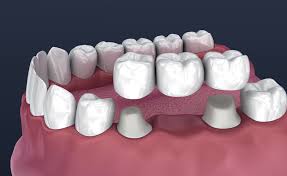
A bridge replaces one or more missing teeth by anchoring to adjacent healthy teeth or implants.
Types of bridges:
Traditional bridge: Crowns on either side of the gap with a false tooth in between
Cantilever bridge: Anchored on only one side (used in limited cases)
Maryland bridge: Uses metal or porcelain framework bonded to back of adjacent teeth
Implant-supported bridge: Anchored to dental implants instead of natural teeth
Why Bridges Are Needed
Replace missing teeth to restore chewing and speaking
Maintain facial structure and prevent sunken appearance
Prevent teeth from shifting into the gap
Improve aesthetics and smile confidence
Procedure
Adjacent teeth are prepared for crowns (for traditional bridges).
Impression of the area is taken.
A temporary bridge is placed while the permanent one is made.
The permanent bridge is cemented onto the teeth or implants.
Benefits
Restores bite and chewing function
Maintains alignment of teeth
Provides natural-looking smile
Long-lasting when properly cared for
⚠️ Care & Maintenance
Brush and floss daily
Use floss threaders or interdental brushes for bridges
Avoid hard foods that can damage crowns or bridges
Regular dental check-ups every 6 months
🧾 Summary
Crowns protect and restore a single tooth
Bridges replace missing teeth using adjacent teeth or implants for support
Both improve function, aesthetics, and oral health
Proper oral hygiene and regular dental visits ensure long-lasting results